

Public Relations today is no longer a peripheral function. It has become a core strategic instrument that shapes reputation, influences decisions, and builds trust.
At White & Associates, we have worked with organisations across industries from emerging businesses to established institutions. One observation remains consistent:
Public Relations is still widely misunderstood at the leadership level.
Not because CEOs lack strategic thinking but because PR is often viewed through a narrow, outdated lens. And in today’s environment, that misunderstanding comes at a cost.
PR Has Evolved. Perceptions Have Not.
Public Relations is no longer confined to news releases or media engagements. It has evolved into a multi-channel, strategic discipline that integrates digital platforms, stakeholder engagement, reputation management, and data-driven communication strategies.
Yet many organisations continue to operate as if PR is still a tactical support function.
This disconnect is where problems begin.
Six Misconceptions That Quietly Undermine Organisations
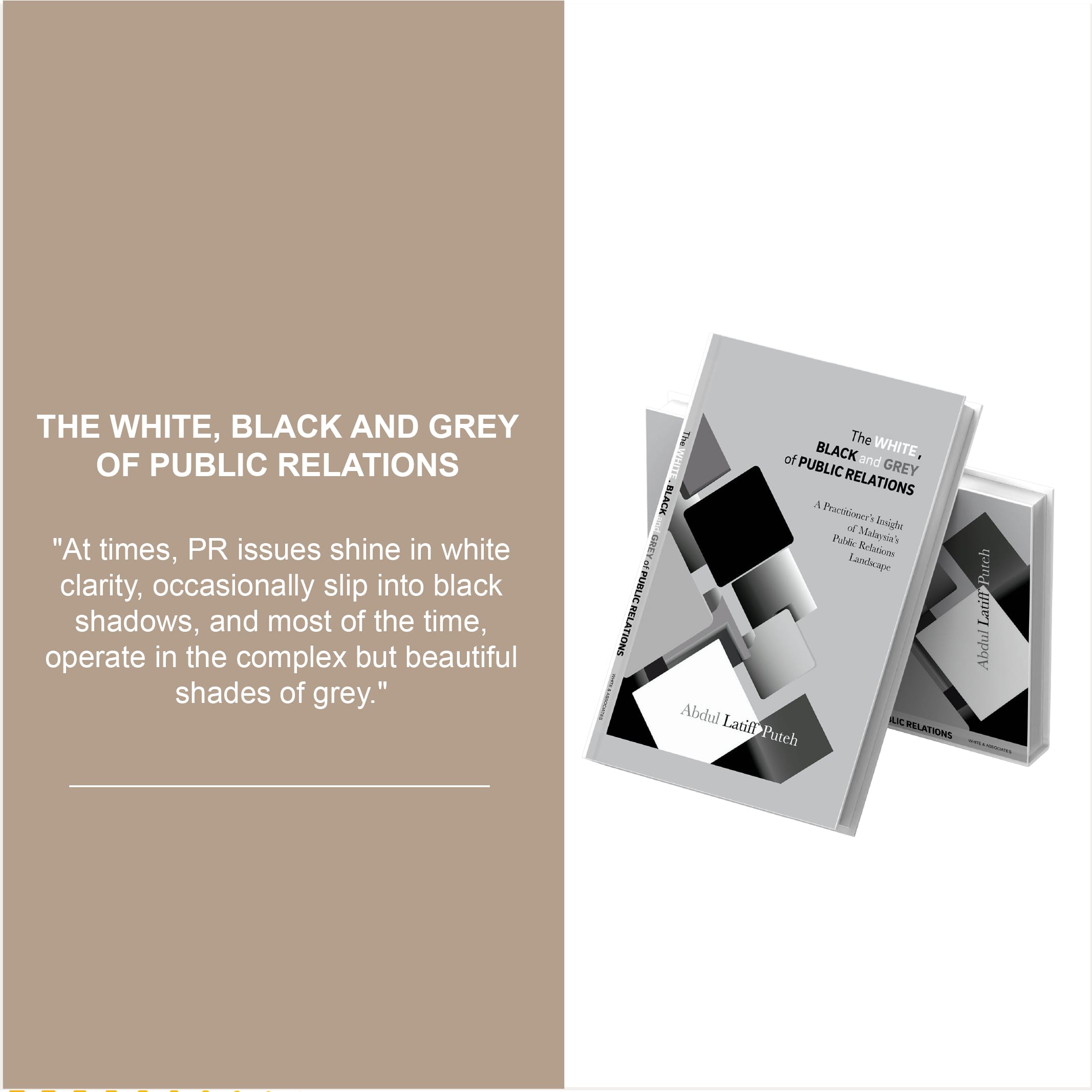
Based on decades of industry experience and reflections documented in The White, Black and Grey of Public Relations, several recurring misconceptions continue to surface:
1. PR is just about media coverage
Media visibility is often mistaken as success. In reality, PR is about building trust, shaping perception, and managing relationships with stakeholders over time.
2. PR delivers instant results
PR is not a switch you turn on during a crisis. It is a long-term investment one that builds credibility before it is needed.
3. PR is a cost centre
When PR is viewed purely as an expense, organisations underinvest in one of their most critical assets: reputation. And reputation, once damaged, is far more expensive to rebuild.
4. PR equals crisis management
Crisis communication is only one part of the discipline. Strong PR practice actually works upstream, preventing crises before they escalate.
5. PR operates in a silo
Effective PR does not function independently. It must be integrated across marketing, HR, legal, and leadership to ensure consistency and strategic alignment.
6. PR is only for large organisations
Every organisation has stakeholders. Which means every organisation needs PR, whether they realise it or not.
The Reality: PR Sits at the Core of Business Strategy
Public Relations today is no longer a peripheral function. It has become a core strategic instrument that shapes reputation, influences decisions, and builds trust.
In practice, PR operates in what can best be described as the “grey area,” the space between what an organisation wants to say and what the public expects to hear. Managing that space requires more than communication skills. It requires judgement, ethics, and strategic alignment.
Why This Matters More Than Ever
The Malaysian PR landscape itself reflects this shift. The industry has moved from traditional media relations to digital engagement, online reputation management, and stakeholder-driven communication strategies.
At the same time, organisations face increasing expectations:
• Greater transparency
• Faster response times
• Stronger accountability
In such an environment, PR cannot be reactive. It must be embedded within the organisation’s decision-making process.
From Misconception to Strategic Advantage
Organisations that understand PR differently tend to perform differently. They:
• Invest in long-term reputation building
• Align communication with business strategy
• Engage stakeholders consistently, not just during crises
• View PR as a leadership function, not a support role
The result is not just better communication. It is stronger trust, resilience, and competitive positioning.
A Final Thought
Public Relations has never been a simple, black-and-white discipline. As reflected in The White, Black and Grey of Public Relations, it exists in the nuances; where strategy meets perception, and where truth must be communicated with both clarity and tact.
For organisations, the question is no longer whether PR is important.
The real question is:
Are you using it strategically or only when it is already too late?
📩 If you would like to explore how strategic PR can strengthen your organisation or to get a copy of the book, connect with White & Associates.
Abdul Latiff Puteh