
The organisations that communicate most effectively are not necessarily those with access to the latest technology.
Beyond the Tools: Why Strategic Thinking Will Always Define Great Public Relations
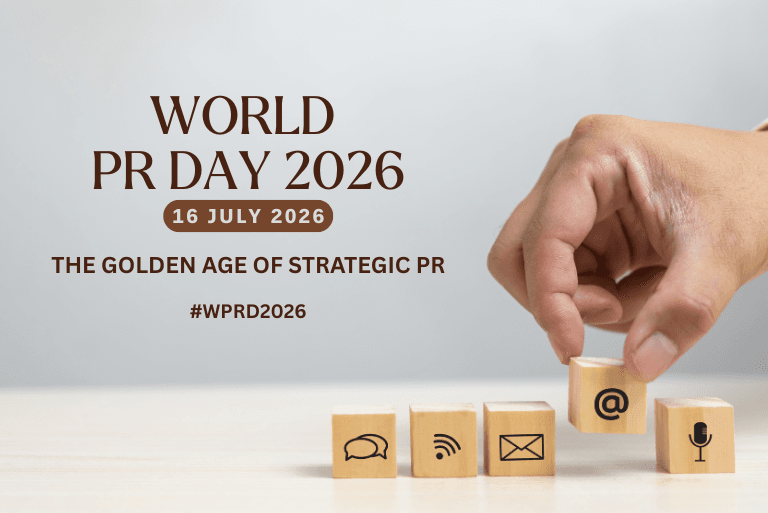
As we celebrate World PR Day, it is an opportune moment to reflect on the true essence of the Public Relations profession and the value it continues to bring to organisations and society.
While we celebrate the achievements of communication professionals around the world, we must also acknowledge the rapidly evolving landscape in which we operate.
Artificial intelligence is reshaping the way we work. Communication technologies continue to advance at an unprecedented pace. New digital platforms emerge, audience behaviours evolve, and stakeholder expectations continue to grow. Today, PR practitioners have access to powerful tools capable of generating content, analysing public sentiment, monitoring media coverage, and automating communication tasks with remarkable speed and efficiency.
These advancements have undoubtedly transformed the practice of Public Relations. Yet they also prompt us to ask a more fundamental question:
What will continue to distinguish exceptional Public Relations professionals in an increasingly automated world?
The answer lies not in the sophistication of the tools we use, but in the quality of the thinking that guides them.
Strategic thinking remains the defining competency of successful Public Relations practice.
Technology Is Transforming PR, Not Replacing It
Technology has always influenced the way communicators work. From the advent of television and the internet to the rise of social media and artificial intelligence, every generation has witnessed innovations that promised to revolutionise communication.
AI is no different.
Today, communication professionals can draft media statements within minutes, monitor conversations across multiple platforms in real time, identify emerging issues before they escalate, and analyse stakeholder sentiment using sophisticated algorithms.
These capabilities are remarkable. However, efficiency should never be confused with effectiveness.
Technology processes information. It identifies patterns. It predicts trends based on historical data.
What it cannot fully understand is organisational context, political realities, cultural sensitivities, stakeholder emotions, ethical dilemmas, or the subtle human dynamics that shape communication outcomes.
Public Relations has never been solely about producing content. It is about influencing understanding, strengthening relationships, protecting reputation, and helping organisations make better decisions.
Those responsibilities cannot be delegated entirely to machines.
Strategic Thinking: The Competitive Advantage
Strategic thinking is often misunderstood as simply planning communication activities or choosing the appropriate channels. In reality, it is much more than that.
Strategic thinking is the ability to see the bigger picture. It requires practitioners to connect communication with organisational purpose, stakeholder expectations, business priorities, and long-term reputation.
Every communication initiative should begin with questions that technology alone cannot answer:
- Why is this issue important now?
- Who are the stakeholders that matter most?
- What are their concerns beyond what the data reveals?
- How might today’s communication influence tomorrow’s trust?
What unintended consequences could emerge if the organisation communicates too early or too late?. These are not technical questions. They are strategic ones.
The answers require judgement developed through experience, critical thinking, environmental scanning, and an appreciation of the broader social, political, economic, and cultural environment.
This is where professional communicators create value.
The organisations that communicate most effectively are not necessarily those with access to the latest technology. They are those that consistently make sound strategic decisions about when to communicate, what to communicate, how to communicate, and, equally important, when not to communicate.
Human Judgement Builds Reputation
Reputation remains one of an organisation’s most valuable strategic assets. It is built over years but can be damaged within moments.
Protecting that reputation requires far more than monitoring dashboards or generating media responses. It requires judgement.
During periods of uncertainty, organisational leaders rarely seek communication professionals simply to write statements or prepare social media posts. They seek trusted advisors.
They seek professionals capable of interpreting stakeholder expectations, evaluating reputational risks, anticipating public reactions, and recommending communication strategies that balance transparency, accountability, and organisational objectives.
This advisory role has become increasingly important.
The modern PR professional is expected to contribute not only to communication decisions but also to business strategy, organisational governance, crisis management, sustainability initiatives, and stakeholder engagement.
Technology can support these responsibilities. It cannot assume them.
Why Human Intervention Matters More Than Ever
Ironically, as artificial intelligence becomes more capable, human intervention becomes even more valuable.
Every AI-generated communication should be viewed as a starting point, not a finished product.
Professional communicators remain responsible for validating facts, verifying sources, evaluating legal implications, considering cultural sensitivities, ensuring ethical compliance, and determining whether the proposed communication genuinely reflects the organisation’s values.
More importantly, they must ask questions that AI cannot meaningfully answer:
- Is this message authentic?
- Does it demonstrate empathy?
- Will affected stakeholders perceive it as sincere?
- Does the tone reflect the seriousness of the issue?
- Could this communication unintentionally undermine trust?
Technology may recommend what appears statistically effective. Human judgement determines what is ethically appropriate and strategically wise. In Public Relations, that distinction matters enormously.
Trust Cannot Be Automated
Every successful organisation ultimately depends on one fundamental asset: Trust.
Trust cannot be programmed into an algorithm. It cannot be generated by automation. Nor can it be sustained through perfectly written content alone. Trust is earned through consistency, credibility, transparency, empathy, and responsible leadership.
These qualities are communicated through human actions, organisational behaviour, and authentic engagement with stakeholders. Public Relations professionals play a central role in cultivating that trust.
Their responsibility extends beyond communication campaigns. They help organisations listen before responding, understand before acting, and engage before persuading.
That is why empathy remains one of the profession’s most strategic competencies. Understanding how people think, feel, and respond enables communicators to build meaningful relationships that endure beyond individual campaigns or crises.
The Future Belongs to Strategic Communicators
The future of Public Relations is not a choice between people and technology. It is about combining the strengths of both.
Successful practitioners will embrace technological innovation while preserving the human capabilities that technology cannot replicate.
They will use AI to improve efficiency, allowing more time for strategic analysis, stakeholder engagement, issues management, creativity, and executive counsel.
They will become interpreters rather than simply creators of information. Advisors rather than technicians. Strategists rather than operators.
This evolution presents an opportunity for the profession to strengthen its position within organisations.
As communication becomes increasingly complex, the need for professionals capable of providing strategic counsel becomes even greater.
Looking Ahead
Every technological revolution has reshaped the communication profession. From traditional media to digital platforms, from websites to social media, and now from automation to artificial intelligence, the tools continue to evolve.
Yet one principle has remained constant:
- Technology enables communication.
- People create understanding.
- Technology delivers information.
- People build relationships.
- Technology increases efficiency.
- People inspire confidence.
Technology may change the way we communicate. Strategic thinking determines whether communication achieves its intended purpose.
As we commemorate World PR Day, let us celebrate not only the evolution of our profession, but also the enduring principles that define it. The future of Public Relations will undoubtedly be shaped by technological innovation, but its success will continue to depend on human insight, ethical judgement, empathy, and strategic thinking.
The tools will continue to change. Strategic thinking will remain essential.
And it is the professionals who combine innovation with wisdom, technology with humanity, and communication with purpose who will continue to build trust, strengthen relationships, and create lasting impact for organisations and the communities they serve.