

As educators, moments like these remind us of something important: teaching is not just about completing a syllabus, it is about shaping how people think.
The real impact of teaching is often invisible, until one day it shows up in your inbox.
As a part-time lecturer in institutions of higher learning, our time with students is often brief, sometimes just 7 to 14 weeks in a semester. Within that limited window, we share knowledge, facilitate discussions, challenge perspectives, and hope that something from the classroom stays with them long after the course ends.
Most of the time, once the semester is over, everyone moves on. Students graduate, enter the workforce, and life continues at its usual pace. Naturally, many lecturers may never hear from them again.
But every once in a while, something unexpected happens.
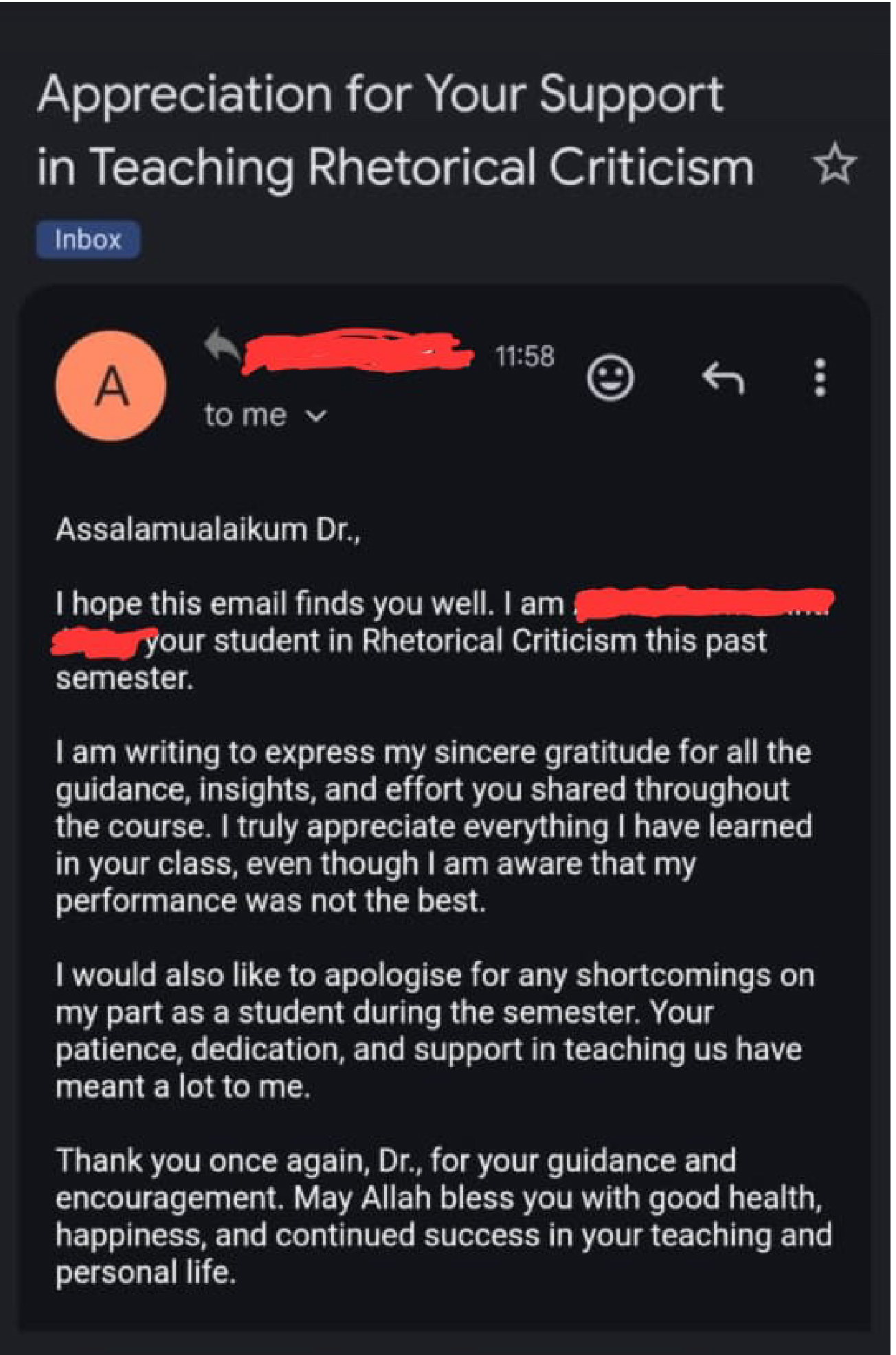
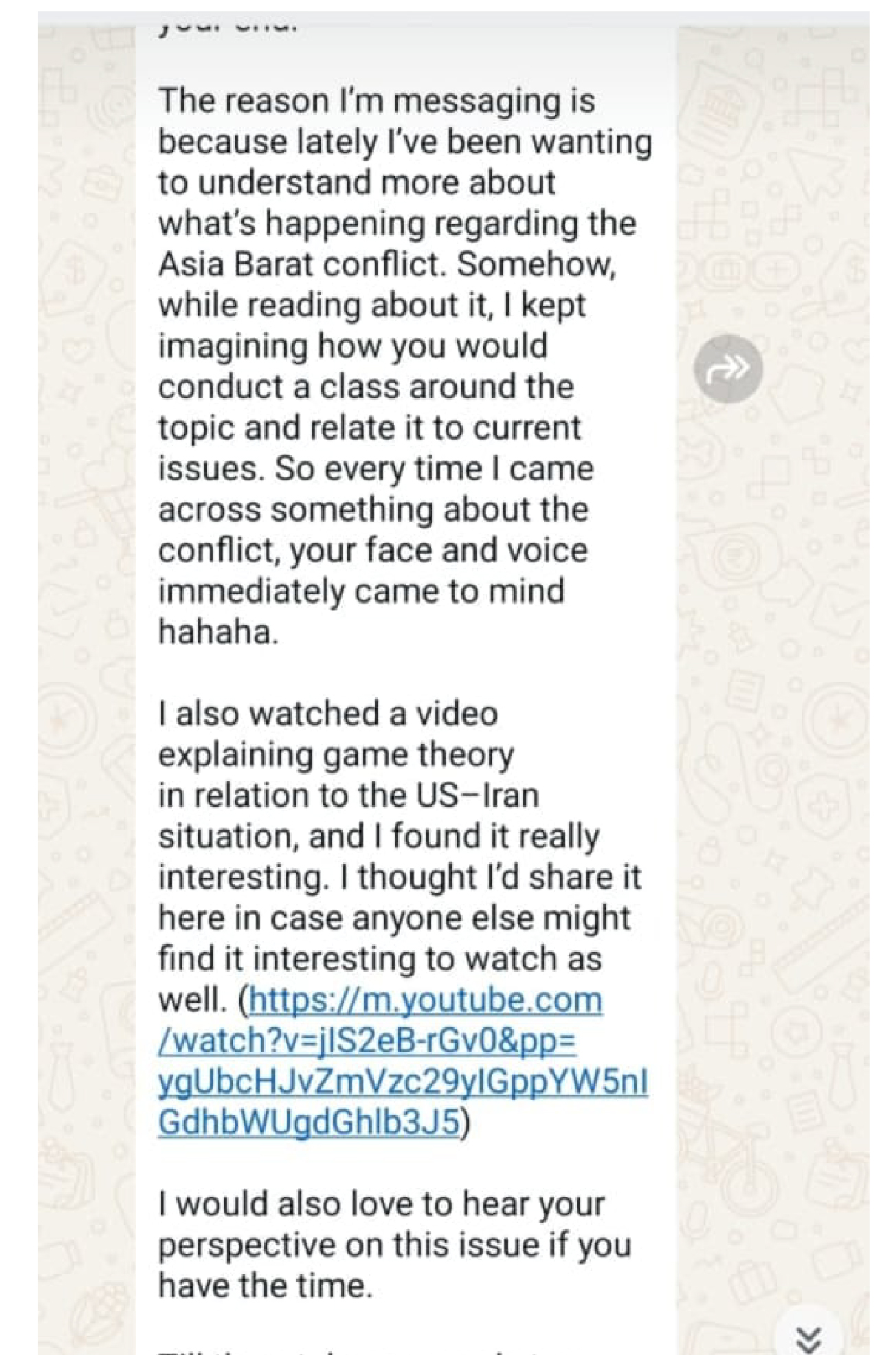
Recently, I received messages from former students expressing appreciation for the lessons, discussions, and perspectives they encountered in class. Some even shared that when they read about global issues or complex topics, they find themselves recalling how we analysed similar issues in the classroom.
As educators, moments like these remind us of something important: teaching is not just about completing a syllabus, it is about shaping how people think.
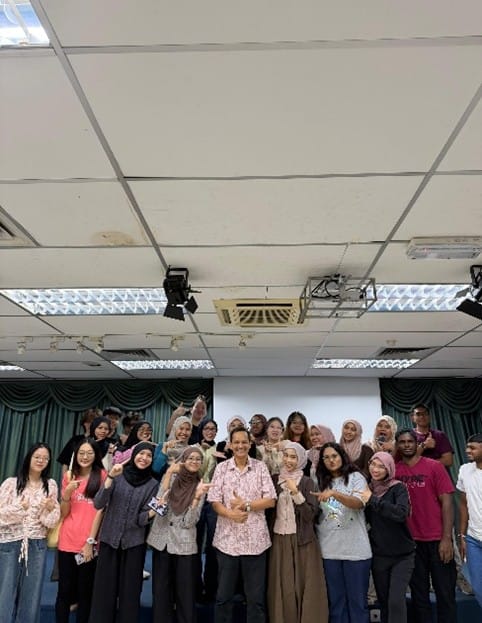
Over the past 20 years of teaching, I have been fortunate to see many former students grow into professionals who are contributing meaningfully to their organisations, industries, and society.
Watching their journeys unfold is one of the quiet rewards of this profession.
What makes these recent messages particularly meaningful is the reminder that the classroom experience can continue to resonate long after the official engagement has ended. When students return not for grades or assignments, but for conversation, perspective, and guidance, that is when you realise that the relationship has evolved beyond lecturer and student.
Moments like this reaffirm why I continue to lecture part-time.
Beyond the slides, lectures, and assessments, education remains one of the most powerful ways to contribute to society. Every discussion, every idea shared, and every perspective challenged has the potential to influence how future professionals think, decide, and lead.
In many ways, teaching is also a form of nation building.
To all my former students who continue to stay in touch, thank you for the reminder that the classroom journey does not always end when the semester does.
Your growth, curiosity, and continued engagement are what make this journey worthwhile.
Abdul Latiff Puteh