

We strongly believe that communication professionals must evolve beyond traditional publicity roles and position themselves as strategic advisors capable of managing relationships, influence, reputation, and organisational trust
In today’s fast-moving communication environment, negotiation is no longer a skill reserved only for diplomats, lawyers, or corporate executives. It has become an essential competency for communication and public relations practitioners who operate within increasingly complex stakeholder environments.
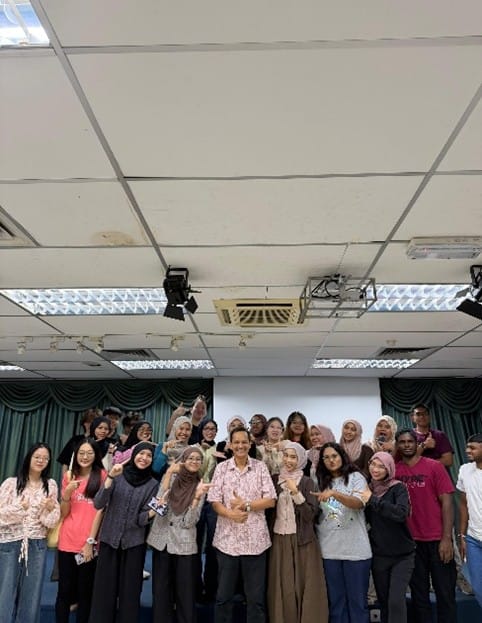
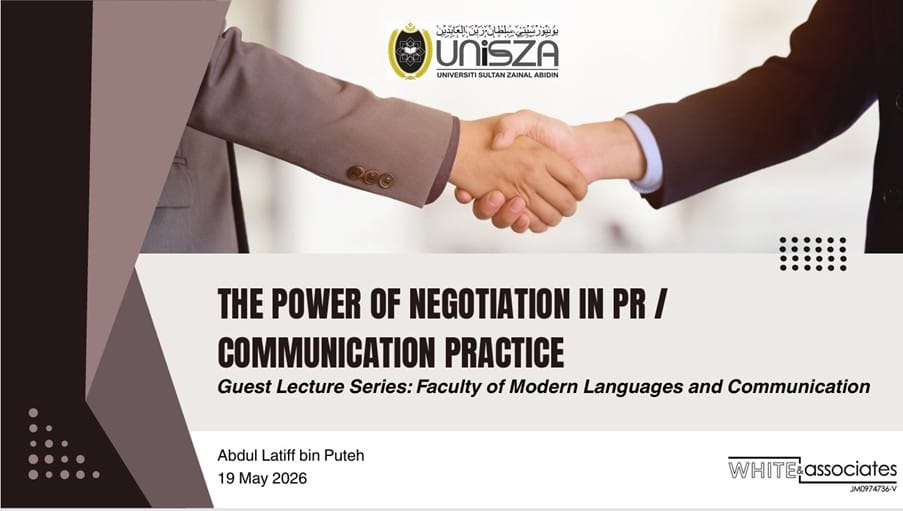
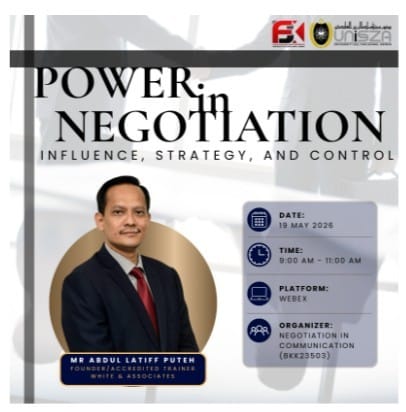
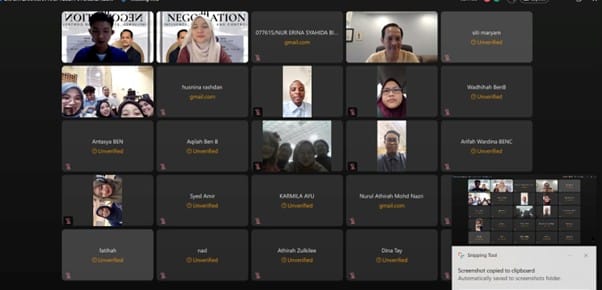
Recently, the Founder of White & Associates had the opportunity to conduct a guest lecture session titled, “The Power of Negotiation in PR / Communication Practice” for students from the Faculty of Modern Languages and Communication, Universiti Sultan Zainal Abidin (UniSZA). The session explored how negotiation plays a central role in shaping communication outcomes, managing relationships, resolving conflicts, and protecting organisational reputation.
Negotiation Is More Than Bargaining
Negotiation is often misunderstood as merely convincing others to agree with us. In reality, effective negotiation is about understanding interests, managing expectations, balancing relationships, and creating outcomes that are sustainable for all parties involved.
In communication and PR practice, negotiation happens almost every day. PR practitioners constantly negotiate between:
- organisational objectives,
- stakeholder expectations,
- media demands,
- public concerns,
- and reputation considerations.
Whether managing a media interview, handling stakeholder dissatisfaction, addressing public backlash, or advising management during a crisis, communication professionals are continuously balancing competing interests.
Why Negotiation Matters in PR Practice
Public Relations is fundamentally built on relationships. Without trust, cooperation, and credibility, even the best communication strategies may fail.
In professional practice, negotiation becomes critical in areas such as:
- media relations,
- crisis communication,
- stakeholder engagement,
- corporate communication,
- government relations,
- community relations,
- and reputation management.
For example, during crisis situations, organisations often face intense pressure from multiple directions. Management may want to minimise reputational damage, the media may demand transparency, while the public expects accountability and immediate responses.
In such situations, PR practitioners become the negotiators between all parties.
The success of crisis communication often depends not only on writing skills or media visibility, but on the ability to negotiate calmly, strategically, and ethically under pressure.
Communication and Negotiation Are Closely Connected
One of the key messages shared during the session was simple:
“Negotiation is communication.”
Strong negotiators are rarely the individuals who speak the most. Instead, they are often the ones who:
- listen carefully,
- identify hidden concerns,
- understand emotions,
- ask strategic questions,
- and manage conversations professionally.
Active listening remains one of the most underrated communication skills in negotiation. Many individuals focus too much on responding instead of understanding.
In communication practice, how something is communicated can sometimes be more important than what is being communicated. Tone, body language, emotional control, and confidence significantly influence negotiation outcomes.
The Role of Power and Influence
Another important area discussed was the concept of power in negotiation. Many people associate power with authority or position. However, in communication practice, influence often comes from:
- credibility,
- expertise,
- information,
- relationships,
- and public trust.
In today’s communication landscape, journalists, influencers, NGOs, online communities, and public opinion all possess significant influence.
This creates an important lesson for future communication practitioners:
The loudest person in the room is not always the most influential.
True influence is built over time through trust, professionalism, ethical conduct, and strong stakeholder relationships.
Ethical Negotiation Matters
The session also highlighted the importance of ethics in communication and negotiation practice. Communication practitioners may sometimes face pressure to:
- hide information,
- manipulate narratives,
- mislead stakeholders,
- or prioritise short-term image protection.
While such approaches may appear effective temporarily, they often damage long-term trust and credibility.
In PR and communication, reputation remains one of the organisation’s most valuable assets. Once public trust is lost, rebuilding it becomes extremely difficult.
This is why ethical negotiation must always remain central to professional communication practice.
Preparing Future Communication Professionals
Today’s communication environment is becoming increasingly challenging:
- technology evolves rapidly,
- audiences are more vocal,
- crises spread faster through social media,
- and stakeholder expectations continue to rise.
As a result, negotiation has become one of the most important skills for future PR and communication professionals.
Beyond communication techniques alone, future practitioners must learn how to:
- manage difficult conversations,
- navigate stakeholder conflicts,
- maintain professionalism under pressure,
- build long-term relationships,
- and influence outcomes strategically and ethically.
At White & Associates, we strongly believe that communication professionals must evolve beyond traditional publicity roles and position themselves as strategic advisors capable of managing relationships, influence, reputation, and organisational trust.
“Communication may open the conversation, but negotiation determines the outcome.”
Abdul Latiff Puteh